
The Age-70 Renewal Visit Opens the Discount Window
You turned 70, the renewal notice arrived, and DC now requires you to renew in person with a vision test instead of online. That administrative change is also the moment most carriers in DC unlock mature-driver discount eligibility—but the discount does not apply automatically, and waiting until after you complete the DMV visit often means waiting another full policy term.
The in-person requirement under DC law begins at age 70 for all drivers on an 8-year renewal cycle. The same age threshold triggers mature-driver discount programs at carriers writing in DC, but the discount request must reach your carrier before the renewal processes, not after. This article walks the timing, the request sequence, and the documentation carriers actually require to apply the rate cut.
Compare car insurance rates in your state
Get quotes from licensed carriers — no obligation, no spam, results in minutes.
Get Your Free QuoteDC In-Person Renewal Age
70
District of Columbia requires vision testing and in-person renewal beginning at age 70, ending online and mail renewal eligibility. The same age threshold opens mature-driver discount programs at most carriers.
DC DMV license renewal rules
What the Mature Driver Discount Actually Covers
Mature-driver discounts reduce the base liability and collision premiums for drivers who meet age and course-completion criteria. The discount applies to bodily injury, property damage, and collision coverage lines—not comprehensive, not PIP where required, not uninsured motorist. The rate cut persists as long as you remain eligible and renew the qualifying course on the carrier's schedule, typically every three years.
Eligibility opens at age 50 or 55 depending on the carrier, but DC's age-70 in-person renewal is when most drivers first learn the discount exists. Carriers do not advertise it on renewal notices, and customer-service scripts rarely mention it unless you ask directly. The discount amount varies by carrier and tier; expect a reduction in the liability and collision premium, not a flat percentage off the total bill.
Course completion is the second requirement. DC accepts classroom and online defensive-driving courses approved by the DMV or a national accrediting body. The course certificate must be dated within the timeframe the carrier specifies—usually 12 months before the policy effective date for initial eligibility, then renewed every three years. Submit the certificate before the renewal processes; retroactive application after the policy renews is rare and requires manual underwriting review.
The discount does not apply automatically at age 70. You must request it and submit course-completion proof before the renewal date, or wait another full term.
How to Request the Discount Before Renewal
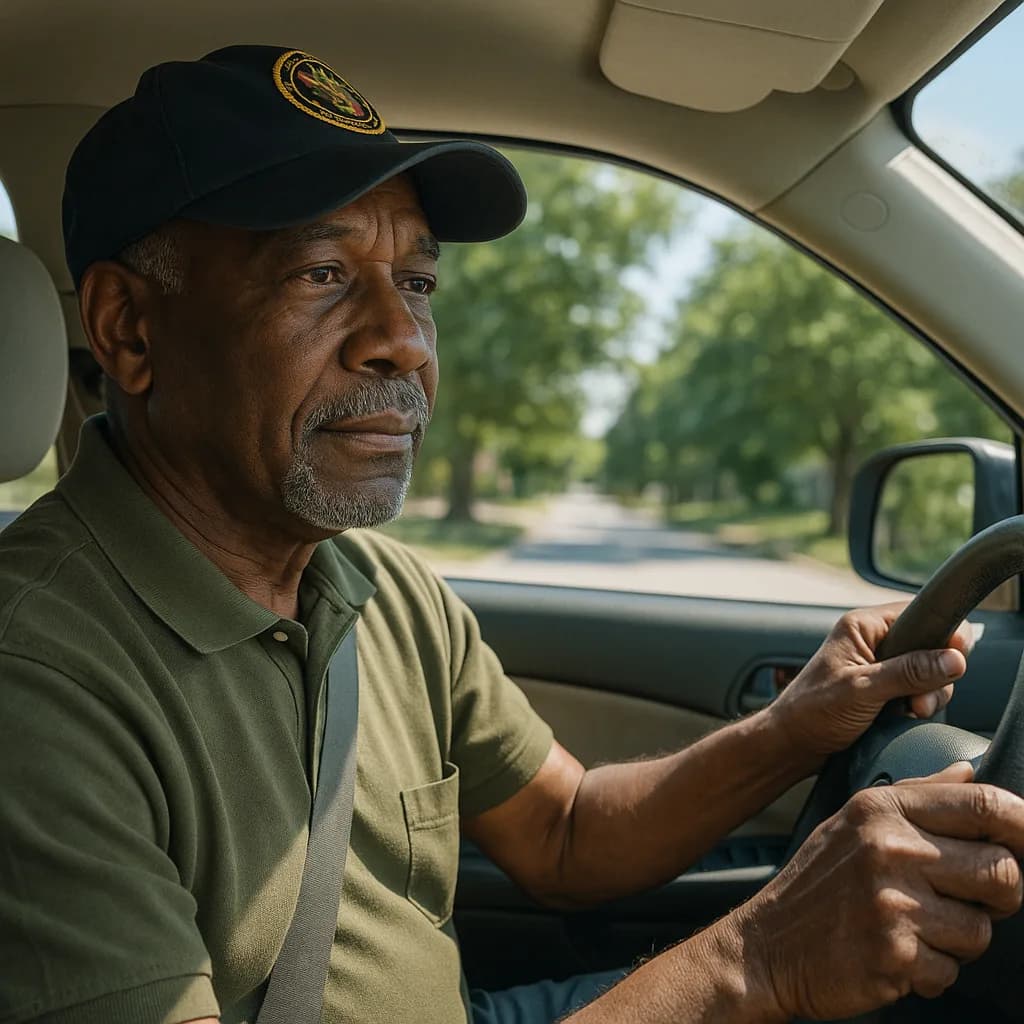
Call your carrier's customer-service line 45 to 60 days before your renewal date. State that you are age 70 or older, ask whether a mature-driver discount is available on your policy, and confirm the course-completion and certificate-submission requirements. Write down the representative's name, the date, and the fax or email address for certificate submission. Do not assume the discount will be noted in your account without explicit confirmation; request a follow-up email summarizing eligibility and next steps.
Complete an approved defensive-driving course within the carrier's lookback window—typically 12 months before the renewal effective date for first-time requests. Submit the certificate by fax or email to the address the representative provided, and keep a timestamped copy of the transmission. Call back 10 to 14 days before renewal to confirm the certificate was received, processed, and attached to your policy. If the discount does not appear on the renewal declaration page, escalate immediately; waiting until after renewal means the correction requires a policy amendment and may not apply until the next term.
Related Articles





Failure Modes Competing Pages Omit
The most common failure is submitting the certificate after the renewal has already processed. Carriers generate renewal pricing 30 to 45 days before the effective date; a certificate submitted two weeks before renewal often arrives too late to change the already-locked premium. The discount then waits until the next renewal cycle, costing you 6 or 12 months of savings depending on your term length.
The second failure is assuming online account portals sync with underwriting systems in real time. Uploading a certificate to your online account does not guarantee it reaches the underwriting queue that applies discounts. Fax or email submission to the specific address provided by a representative creates a timestamped record; portal uploads often sit unprocessed until a manual review, which may not happen before renewal.
The third failure is course expiration. If you completed a defensive-driving course four years ago and request the discount now, the certificate is stale under most carriers' three-year renewal rules. You must complete a new course, submit the new certificate, and meet the timing window. Stale certificates delay eligibility another full term while you re-complete the course and wait for the next renewal.
Auto-renewal is the fourth trap. If your policy auto-renews and the discount was not applied before the renewal date, the new term begins at the old rate. Correcting it mid-term requires a policy amendment, and not all carriers allow retroactive discount application. The amendment may apply only from the request date forward, not back to the renewal effective date, costing you months of savings you qualified for but did not receive.
Course Renewal Cycle
3 years
Most carriers require defensive-driving course renewal every three years to maintain mature-driver discount eligibility. Missing the renewal deadline removes the discount at the next policy term; reinstatement requires completing a new course and submitting proof before the following renewal.
DC-Specific Timing and the Vision-Test Window
DC processes in-person renewals within 5 business days when documentation is complete. The vision test happens at the DMV visit; if you pass, the renewed license issues immediately. Schedule the DMV appointment 60 to 75 days before your license expiration date so the renewed license is in hand before your insurance renewal processes. Some carriers require a copy of the renewed license as proof of age and continued eligibility; submitting it alongside the course certificate avoids a second round of documentation requests.
If your insurance renewal date falls before your license expiration date, request the mature-driver discount based on your current age and submit the course certificate on the standard timeline. The carrier does not require proof of the completed DMV visit to apply the discount, but having the renewed license ready prevents delays if underwriting requests additional age verification. The discount eligibility is tied to your birthdate, not your license renewal date; the two timelines overlap but do not depend on each other.
Compare Carriers by Discount Structure and Tier
Not all carriers writing in DC offer mature-driver discounts, and those that do apply different eligibility ages, course-approval lists, and renewal cycles. Standard-tier carriers in DC typically open eligibility at age 55 with a three-year course-renewal requirement. Preferred-tier carriers may require age 60 or restrict eligibility to drivers with clean records over the prior three years. Non-standard-tier carriers rarely offer mature-driver discounts; if your current carrier is non-standard and you now qualify for standard-tier coverage, re-shopping moves you into the discount-eligible pool.
When comparing quotes, ask each carrier three questions: what age opens mature-driver discount eligibility, what defensive-driving courses are accepted, and how often must the course be renewed. A carrier offering a larger discount with a two-year renewal cycle may cost more over six years than a carrier with a smaller discount and a three-year cycle. The total cost over the renewal period matters more than the discount percentage at a single term.